
The 5-Step Quality Control Process for Premium Leather Belts
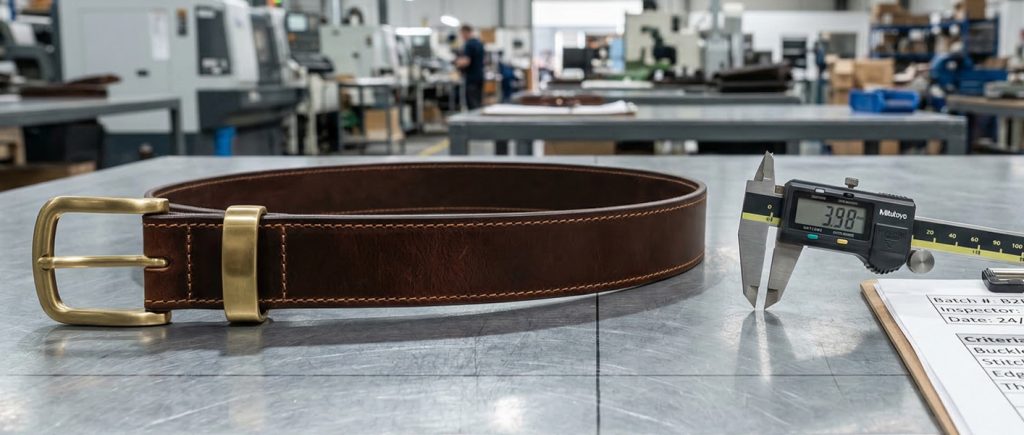
In the global fashion and accessories market, product quality is one of the most important factors influencing brand reputation. For leather belt brands selling in Europe and North America, customers expect products that are durable, consistent, and professionally crafted.
Achieving this level of quality requires more than skilled production—it requires a strict and systematic quality control process.
At GZNIUS, a professional belt manufacturer in China specializing in high-end OEM/ODM belt production, we follow a structured multi-stage inspection system to ensure every belt meets international quality standards before shipment.
In this article, we introduce the 5-step quality control process used in premium belt manufacturing, explaining how factories maintain consistent product quality from raw materials to final packaging.
Why Quality Control Matters in Belt Manufacturing
Leather belts involve multiple materials and production stages, including:
- Leather straps
- Metal buckles and hardware
- Stitching and edge finishing
- Surface treatments
- Packaging and labeling
Without strict quality control, even small issues can lead to problems such as:
- Leather cracking
- Loose buckles
- Uneven stitching
- Edge paint peeling
A professional QC system ensures that every belt leaving the factory is durable, visually consistent, and ready for global retail markets.
The 5-Step Quality Control Process for Premium Leather Belts
High-end belt manufacturing requires inspection throughout the entire production workflow, not just at the final stage.
Below is the standard step-by-step QC process used in professional factories like GZNIUS.
1. Raw Material Inspection
The first step in quality control begins before production even starts.
All incoming materials are inspected to verify:
- Leather thickness and consistency
- Surface quality and natural grain condition
- Color consistency between batches
- Hardware material composition
- Buckle plating quality
For leather materials, inspectors check for:
- Natural scars or defects
- Weak fiber structure
- Uneven dye penetration
Only materials that meet production standards are approved for manufacturing.
2. Cutting Inspection
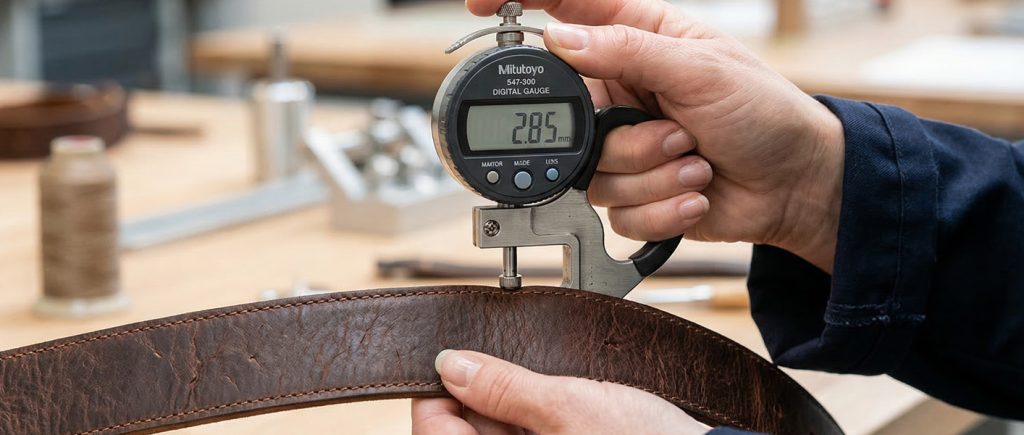
Once materials pass the initial inspection, the next stage is precision leather cutting.
During this stage, inspectors verify:
- Correct strap width and length
- Straight cutting lines
- Leather grain alignment
- Proper thickness for the belt design
Accurate cutting ensures that the belt maintains structural integrity and visual consistency.
Poor cutting can lead to issues such as asymmetrical belts or uneven edges.
3. Stitching & Edge Finishing Sampling Inspection
During the main production process, quality inspectors perform random sampling inspections.
Key elements checked include:
- Stitching density and alignment
- Thread tension consistency
- Edge paint smoothness
- Multi-layer edge coating quality
- Edge cracking resistance
Edge finishing is particularly important because it directly affects durability and premium appearance.
For high-end belts, inspectors ensure the edge coating is smooth, uniform, and properly sealed.
4. Hardware Strength & Durability Testing
Hardware reliability is essential for belt performance.
Before final assembly approval, buckles and metal components undergo durability testing.
Typical tests include:
Buckle Pull Strength Test
- Measures the force required to detach the buckle from the strap
- Ensures the belt can withstand daily tension
Hardware Salt Spray Test
- Simulates long-term exposure to humidity and sweat
- Evaluates corrosion resistance of electroplated surfaces
Clasp Durability Test
- Tests repeated opening and closing cycles
- Ensures smooth functionality over time
These tests confirm that the hardware meets international durability standards.
5. Final Inspection Before Packaging
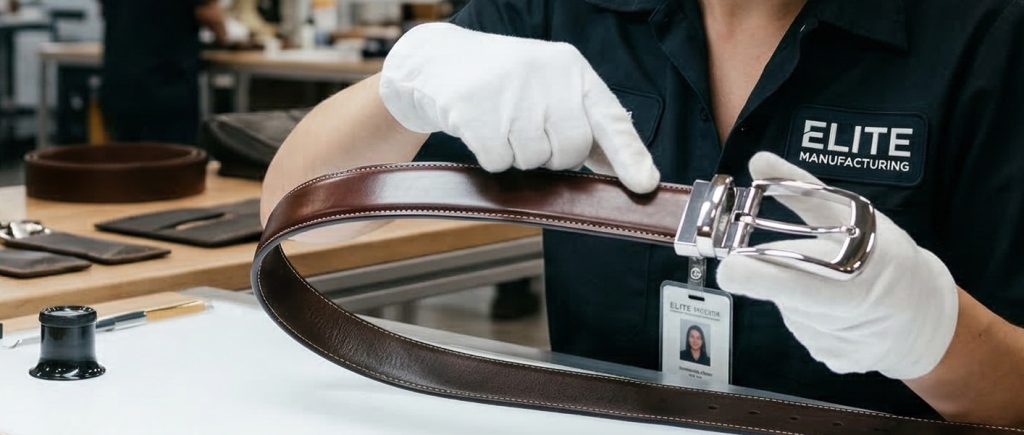
The last step is a 100% final product inspection before packaging.
Inspectors verify:
- Overall appearance and craftsmanship
- Correct logo placement
- Proper belt length and sizing
- Smooth buckle operation
- Clean packaging presentation
Only belts that pass this final inspection are approved for shipment.
This final stage ensures that customers receive consistent, retail-ready products.
Quality Control Comparison: Basic vs Premium Belt Production
The depth of quality control is often what separates premium manufacturers from low-cost suppliers.
| Quality Control Stage | Basic Manufacturing | Premium Manufacturing |
|---|---|---|
| Raw Material Inspection | Limited | Strict material screening |
| Cutting Inspection | Minimal checks | Precision measurement |
| Production Monitoring | Rare sampling | Regular QC inspections |
| Hardware Testing | Often skipped | Strength & corrosion testing |
| Final Inspection | Partial | 100% product inspection |
Brands targeting international markets typically require premium QC standards to maintain consistent product quality.
How GZNIUS Maintains International Quality Standards
At GZNIUS, quality control is integrated into every stage of production.
Our factory implements:
- Multi-stage inspection procedures
- Skilled QC specialists
- Hardware durability testing
- Strict leather material standards
- Export-level packaging inspections
This system ensures that belts manufactured for our partners meet the quality expectations of global retailers and fashion brands.
FAQ
1. Why is quality control important for leather belts?
Leather belts experience daily wear and tension. Proper quality control ensures the belt remains durable, functional, and visually consistent over time.
2. What durability tests are used for belt hardware?
Common tests include buckle pull strength testing and salt spray testing, which measure hardware strength and corrosion resistance.
3. Do all belts undergo final inspection before shipment?
Yes. At GZNIUS, we conduct 100% final inspection before packaging to ensure every belt meets our quality standards.
Partner With GZNIUS for Reliable Belt Manufacturing
If your brand is looking for a manufacturing partner that prioritizes quality, consistency, and professional production standards, GZNIUS is ready to help.
We specialize in high-end OEM/ODM belt manufacturing, offering complete support from material sourcing to final quality inspection.
Contact GZNIUS today to request a free quotation and learn how we can support your next belt collection.