
How to Calculate the Real Cost of OEM Belt Manufacturing in 2026
For fashion brands, retailers, and private-label businesses, understanding the true cost structure of OEM belt manufacturing is essential for building a profitable product line.
Many buyers initially focus only on the unit price quoted by a manufacturer, but the real cost of a belt is determined by several underlying components—each affecting quality, durability, and brand positioning.
At GZNIUS, a professional belt manufacturer in China specializing in high-end OEM/ODM belt production, we believe in transparent cost structures. When brands understand how costs are distributed, they can make better decisions about materials, craftsmanship, and product pricing.
In this guide, we break down the real manufacturing cost structure of a belt in 2026, helping brands clearly understand where their investment goes.
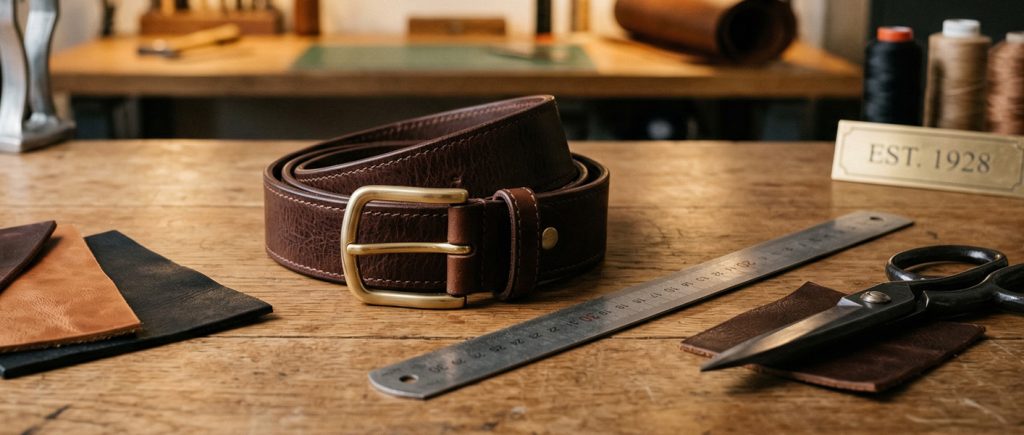
The Real Cost Structure of a Belt (2026 Industry Standard)
In professional belt manufacturing, the cost of a belt typically comes from four major components.
Think of it as a cost “pie chart”, where each part represents a different percentage of the total production cost.
- Typical OEM Belt Cost Breakdown
- Leather Material: 40%
- Hardware (Buckle & Metal Parts): 20%
- Craftsmanship & Labor: 30%
- Packaging & Accessories: 10%
This structure may vary slightly depending on design complexity, but it reflects the general industry standard for mid-to-high-end belts.
Step-by-Step Breakdown of Belt Manufacturing Costs
Below is a detailed explanation of how each component contributes to the total manufacturing cost.
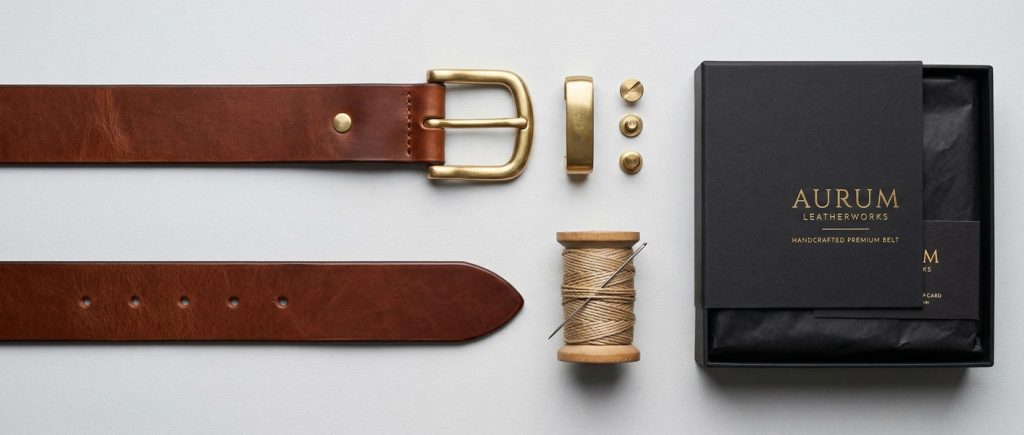
1. Leather Material (≈40% of Total Cost)
Leather is the largest cost component in belt manufacturing.
The price varies depending on several factors:
- Leather type (full-grain, top-grain, split leather)
- Tanning method (vegetable-tanned or chrome-tanned)
- Thickness and cut quality
- Country of leather origin
For premium belts, brands typically choose top-grain or full-grain leather, which significantly increases durability and brand value.
A high-quality leather strap ensures:
- Long product lifespan
- Better wear resistance
- Higher perceived product value
For this reason, reputable brands rarely compromise on leather quality.
2. Belt Hardware (≈20% of Total Cost)
The second major cost factor is the belt buckle and metal hardware.
Hardware cost depends on:
- Metal material (zinc alloy, brass, stainless steel)
- Buckle design complexity
- Mold development
- Surface finishing (electroplating, brushed finish, anti-fade coating)
For example:
- Custom die-cast buckles require mold investment.
- Brass buckles cost more due to material density and machining.
- Premium electroplating finishes increase durability and appearance.
Well-designed hardware significantly enhances the visual identity and perceived value of a belt product.
3. Craftsmanship & Labor (≈30% of Total Cost)
The third major component is manufacturing craftsmanship.
This includes multiple production stages such as:
- Leather cutting
- Strap shaping
- Edge finishing
- Stitching
- Buckle installation
- Quality inspection
High-end belts require more complex craftsmanship, especially in processes like:
- Multi-layer edge painting
- Precision stitching
- Hand polishing
Factories that prioritize craftsmanship typically invest in skilled workers and stricter quality control, which contributes to a higher—but justified—production cost.
4. Packaging & Accessories (≈10% of Total Cost)
Although packaging represents a smaller portion of the cost structure, it still plays a critical role in brand presentation and retail readiness.
Packaging costs may include:
- Branded boxes
- Dust bags
- Hang tags
- Barcodes and labels
- Protective wrapping
For premium brands, well-designed packaging improves customer experience and perceived value, especially in retail or e-commerce environments.
OEM Belt Cost Comparison: Low-End vs Premium Production
The difference between low-cost belts and premium belts often lies in how these cost components are allocated.
| Cost Component | Low-Cost Belt | Premium OEM Belt |
|---|---|---|
| Leather | Lower-grade split leather | Full-grain or top-grain leather |
| Hardware | Basic plated alloy | Custom-designed hardware |
| Craftsmanship | Minimal finishing | Advanced craftsmanship |
| Packaging | Simple plastic packaging | Branded retail packaging |
| Overall Quality | Short lifespan | Long-lasting premium product |
For brands targeting the European and North American markets, premium belts generally provide better customer satisfaction and stronger brand reputation.
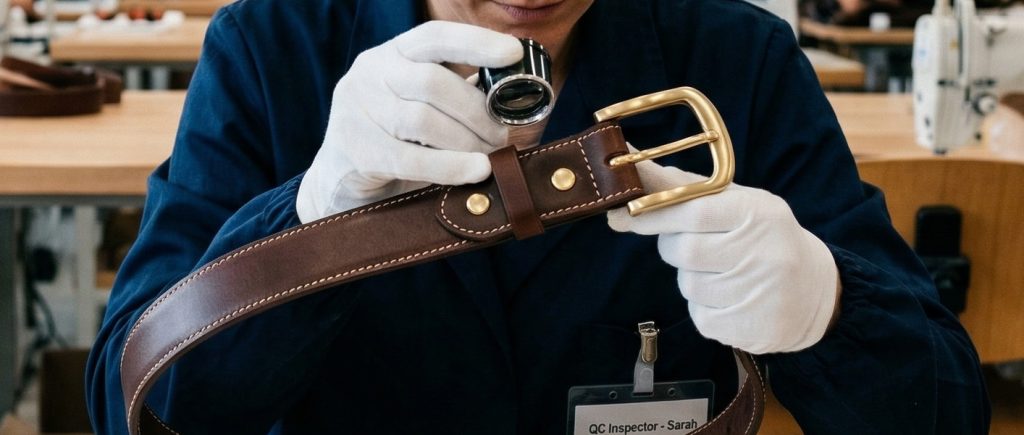
Why Transparency Matters in OEM Manufacturing
In international sourcing, the lowest price is not always the best value.
When manufacturers offer extremely low pricing, it often means compromises in:
- Leather quality
- Hardware durability
- Edge finishing
- Production quality control
At GZNIUS, we emphasize transparent manufacturing costs because strong brand partnerships rely on trust and long-term quality consistency.
Our goal is to help brands achieve the right balance between:
- Cost efficiency
- Product durability
- Brand positioning
Why Global Brands Choose GZNIUS
GZNIUS is a professional belt manufacturing factory in China specializing in high-quality OEM/ODM belt production for international brands.
Our capabilities include:
- Premium leather sourcing
- Custom buckle and hardware development
- Advanced edge finishing craftsmanship
- Professional packaging solutions
- Strict export quality control
- Flexible MOQ for new brands
With years of experience producing belts for global fashion brands and retailers, we understand how to deliver products that meet international quality standards and market expectations.
FAQ
1. What is the average MOQ for OEM belt manufacturing?
MOQ typically ranges from 300 to 500 pieces per design, depending on customization requirements such as buckle molds and packaging.
2. Why do some belt manufacturers quote much lower prices?
Lower prices often result from lower-grade leather, simplified craftsmanship, or lower-quality hardware, which can reduce product durability and brand value.
3. Can I customize materials to control production costs?
Yes. At GZNIUS, we help brands optimize material selection, hardware design, and packaging to achieve the best balance between cost and product positioning.
Start Your OEM Belt Project With GZNIUS
If you’re planning to develop a new belt collection or private-label brand, working with an experienced manufacturer is the key to achieving the right balance between quality and cost.
At GZNIUS, we provide full OEM/ODM belt manufacturing services, including design support, material sourcing, sample development, and large-scale production.
Contact GZNIUS today to receive a free quotation and start building your next successful belt collection.