
The Art of Belt Edge Finishing: Why It Defines a Premium Belt
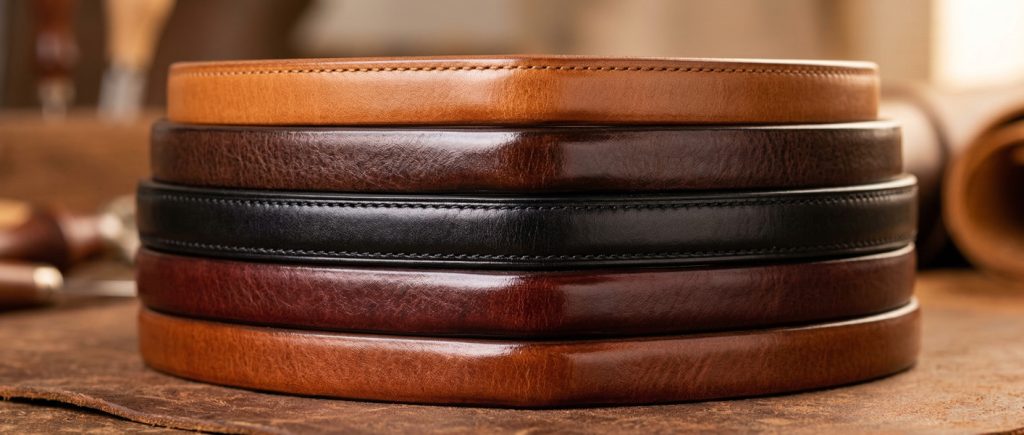
In the world of leather belts, details define quality. While consumers often focus on the leather and buckle, experienced buyers and fashion brands know that one subtle detail reveals the true craftsmanship of a belt: edge finishing.
The edge of a belt is constantly exposed to friction, bending, and daily wear. Poor edge finishing can lead to cracking, peeling, discoloration, and early product failure. On the other hand, a properly finished edge signals durability, craftsmanship, and premium positioning.
At GZNIUS, a professional belt manufacturer in China specializing in high-end OEM/ODM belt production, we place significant emphasis on edge finishing techniques. For global brands, this process is essential to delivering belts that meet premium quality standards and long-term durability expectations.
This article explains why belt edge finishing matters and how professional factories achieve high-end results through a precise step-by-step process.
Why Edge Finishing Is Critical for Premium Belts
Edge finishing affects three key aspects of a belt product:
1. Durability
A properly sealed edge prevents moisture penetration and leather separation.
2. Comfort
Smooth edges ensure the belt feels comfortable when worn and handled.
3. Brand Perception
Clean, polished edges visually communicate luxury craftsmanship.
For brands targeting mid-to-high-end markets, edge finishing is one of the most noticeable differences between premium belts and mass-market belts.
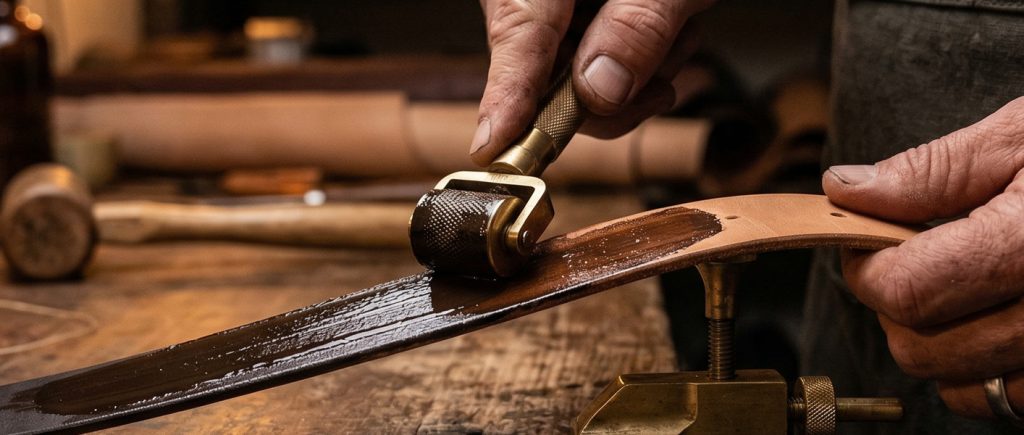
Step-by-Step: Professional Belt Edge Finishing Process
High-quality edge finishing is not a single step—it is a multi-stage craftsmanship process.
Below is the standard process used by professional belt manufacturers like GZNIUS.
Step 1: Edge Trimming
After the leather strap is cut, the edges are precision-trimmed to ensure a clean and uniform shape.
This step removes rough fibers and prepares the belt for further finishing.
Key objectives:
- Achieve straight, consistent edges
- Remove uneven leather fibers
- Prepare the belt for polishing and coating
Step 2: Edge Sanding and Smoothing
Next, the edges are mechanically sanded and polished.
This stage is essential for creating a smooth surface that allows edge paint or finishing materials to adhere properly.
Professional sanding ensures:
- No rough edges
- Consistent thickness
- Improved durability for later coatings
Low-cost factories often skip proper sanding, which leads to edge cracking after short-term use.
Step 3: First Edge Paint Application (Base Coating)
The first layer of edge paint (also called edge coating) is applied to seal the leather fibers.
This base coat helps:
- Protect the leather edge
- Prevent moisture absorption
- Create the foundation for a smooth finish
The belt is then heated and dried to ensure proper bonding.
Step 4: Secondary Sanding
After the base coat dries, the edge is lightly sanded again to remove any imperfections.
This step ensures the next coating layer will produce a perfectly smooth and rounded edge.
Step 5: Multiple Edge Paint Layers
High-end belts typically receive multiple layers of edge paint.
Each layer is applied, dried, and polished before the next layer is added.
Premium brands often require 3–5 coating layers to achieve a luxurious finish.
Benefits include:
- Thicker protective coating
- Smooth, rounded edge profile
- Enhanced durability
Step 6: Final Polishing and Sealing
The final stage involves edge polishing and sealing.
This creates a refined, glossy, or matte finish depending on the design requirements.
The finished edge should feel:
- Smooth to the touch
- Visually uniform
- Highly resistant to cracking or peeling
Oil Edge vs. Basic Edge Finishing: Key Differences
One of the biggest differences between premium belts and low-cost belts is the quality of the edge coating process, often called oil edge finishing.
| Feature | Premium Oil Edge | Basic Edge Finish |
|---|---|---|
| Coating Layers | 3–5 layers | 1–2 layers |
| Sanding Process | Multiple polishing stages | Minimal sanding |
| Edge Smoothness | Very smooth and rounded | Rough or flat |
| Durability | Long-lasting, crack-resistant | Prone to peeling |
| Appearance | Luxury craftsmanship | Mass-production look |
At GZNIUS, we follow strict multi-layer edge finishing standards to ensure belts meet the expectations of international brands.
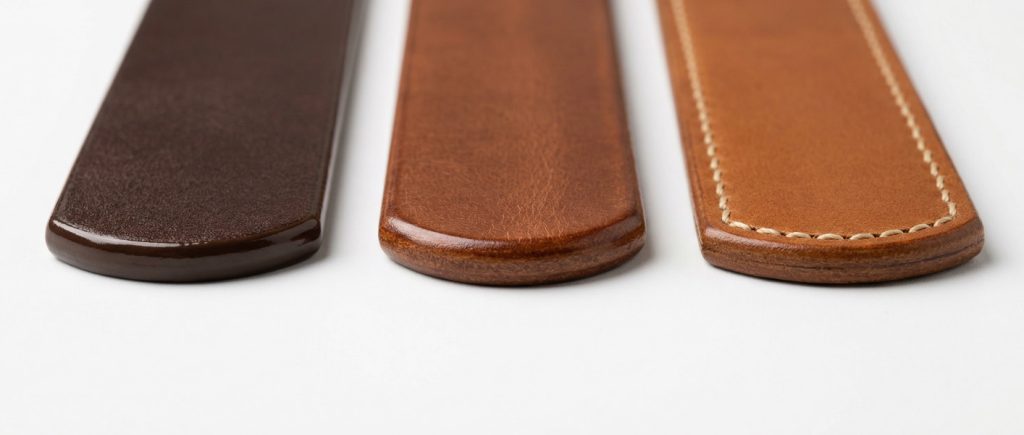
Other Edge Finishing Techniques Used in Belt Manufacturing
In addition to oil edge finishing, several other edge techniques are commonly used depending on the belt design.
Folded Edge (Turned Edge)
The leather edge is folded inward and stitched, hiding the raw edge completely.
Advantages:
- Extremely clean appearance
- Comfortable edge profile
- Common in luxury dress belts
Burnished Edge
Often used with full-grain vegetable-tanned leather, burnishing compresses the leather fibers using friction and wax.
Advantages:
- Natural handcrafted look
- Popular for heritage-style belts
Painted Edge
Edge paint is applied for modern fashion belts, especially in designer collections.
Advantages:
- Wide color options
- Smooth modern appearance
Why Edge Finishing Reflects True Manufacturing Expertise
Edge finishing requires experience, precision, and strict quality control.
At GZNIUS, our belt production process includes:
- Skilled craftsmen trained in leather finishing
- High-quality imported edge paints
- Multi-stage polishing procedures
- Strict inspection standards
These details ensure our belts deliver the durability and premium appearance expected by global fashion brands.
For OEM/ODM partners, this level of craftsmanship helps protect brand reputation and product quality in competitive retail markets.
FAQ
1. Why do some belts develop cracked edges over time?
Edge cracking usually happens when manufacturers use too few edge paint layers or skip proper sanding steps. Premium belts require multiple coating and polishing stages to prevent cracking.
2. Which edge finishing method is best for premium belts?
Multi-layer oil edge finishing and folded edge construction are commonly used for high-end belts because they provide excellent durability and a refined appearance.
3. Can edge colors be customized for brand designs?
Yes. At GZNIUS, we offer custom edge colors and finishing styles to match brand identity, including matte, glossy, and contrast-edge designs.
Partner With GZNIUS for Premium Belt Manufacturing
If you are developing a new belt collection or private-label brand, choosing a manufacturer that understands the details of leather craftsmanship is essential.
At GZNIUS, we provide professional OEM/ODM belt manufacturing, from leather sourcing and hardware design to advanced edge finishing techniques.
Our team helps brands create belts that meet premium quality standards and global market expectations.
Contact GZNIUS today to request a free quotation and start your custom belt project.